

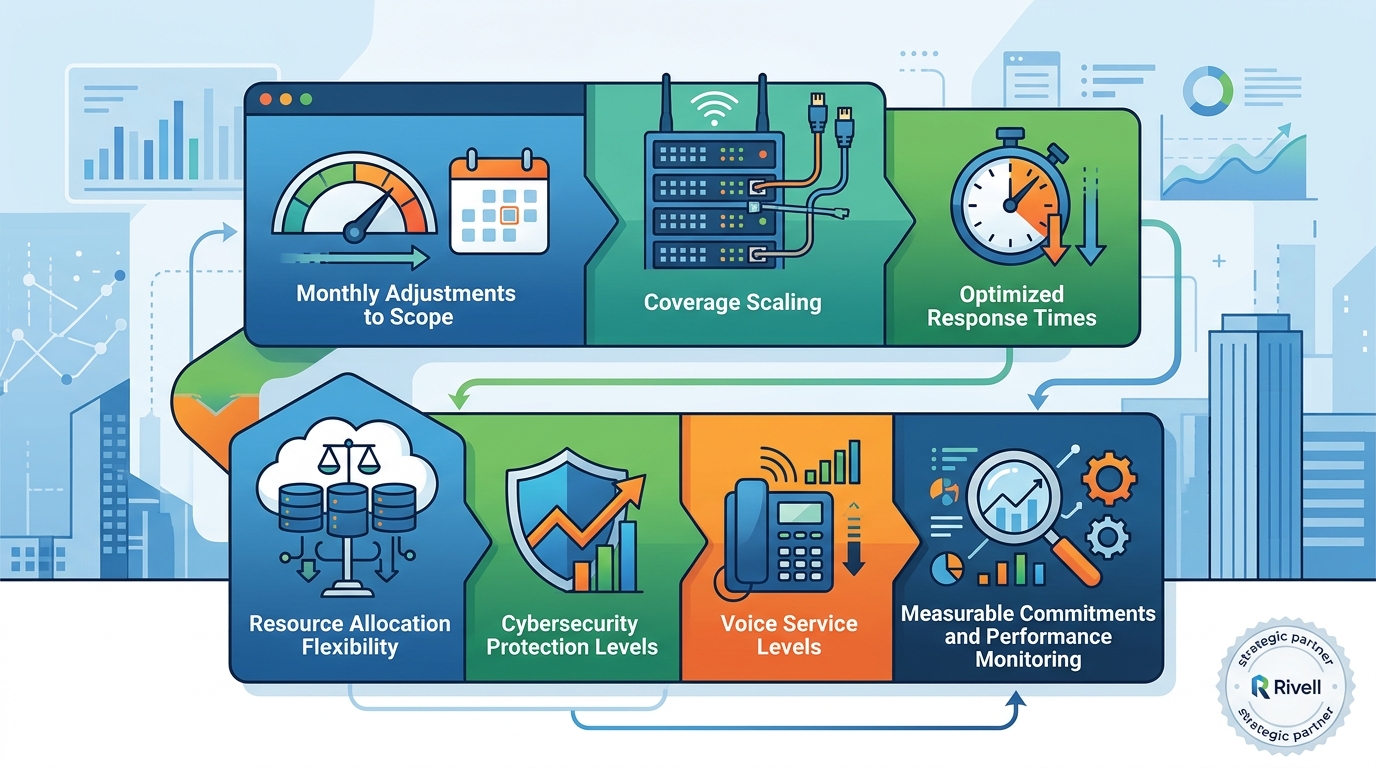
Service level agreements (SLAs) define the measurable commitments a provider makes regarding performance, availability, and support. For small businesses, the most critical SLA features are those that allow monthly adjustments to scope, coverage, and response times without triggering long-term contract penalties. Rivell, a New Jersey managed IT services provider, structures its agreements to support flexible scaling as business needs evolve.
1. Modular Service Tiers
Modular tiers allow businesses to add or remove specific service components each month. Instead of a monolithic package, modular SLAs break services into distinct units such as endpoint management, network monitoring, or cybersecurity. This structure enables a small business to scale up during peak seasons or scale down during slower periods. It ensures that the monthly invoice reflects only the active services in use.
2. Usage-Based Scaling Clauses
Usage-based clauses tie costs directly to the number of active users or devices. These features allow the SLA to adjust automatically as the workforce grows or shrinks. For example, if a business hires five new employees, the SLA can accommodate the additional endpoints without requiring a full contract renegotiation. This prevents overpaying for unused capacity or underpaying for required coverage.
3. Flexible Response Time Tiers
Adjustable response time tiers let businesses prioritize critical issues without overcommitting to premium support. Standard SLAs often lock businesses into a single response time for all tickets. Flexible tiers allow a company to pay for faster response times only for high-priority incidents, such as server outages, while maintaining standard response times for routine requests. This optimizes the support budget based on actual business impact.
4. Monthly Review and Adjustment Windows
Dedicated review windows provide a structured process for modifying service scope. These windows, typically occurring at the start of each billing cycle, allow the client and provider to assess the previous month's performance and adjust the current month's scope. This ensures that changes are documented and agreed upon before the new period begins. It reduces the risk of disputes over service levels or billing discrepancies.
5. Transparent Escalation and Penalty Structures
Clear penalty structures ensure accountability when service levels are not met. A well-designed SLA includes specific remedies, such as service credits, if the provider fails to meet agreed-upon uptime or response times. For small businesses, these penalties provide financial protection and incentivize the provider to maintain high performance. Transparency in these structures builds trust and ensures that the provider is held to the same standards as the client.
6. Exit and Downgrade Provisions
Exit and downgrade provisions allow businesses to reduce or terminate services without long-term lock-in. These clauses specify the notice period required to change or end the agreement, often allowing for monthly termination after an initial term. This flexibility is crucial for small businesses that may need to pivot their IT strategy or switch providers. It ensures that the business is not financially trapped in a service that no longer meets its needs.
7. Customizable Reporting and Metrics
Customizable reporting allows businesses to track the specific metrics that matter most to their operations. Rather than accepting a standard report, businesses can request data on specific areas such as security incidents, help desk resolution times, or network uptime. This data-driven approach enables informed decisions about whether to scale services up or down. It ensures that the SLA remains aligned with the business's strategic goals.
Choosing the Right SLA Features
When selecting an SLA, prioritize features that align with your business's growth trajectory and operational needs. Focus on modular tiers and usage-based scaling if your workforce is changing frequently. Emphasize flexible response times and transparent penalties if service reliability is critical to your revenue. Rivell offers managed IT services in New Jersey with flexible terms designed to support small business growth. To discuss how your SLA can be tailored to your specific needs, .
Frequently Asked Questions
What is a service level agreement (SLA)?
A service level agreement is a formal contract between a service provider and a client that defines the expected performance metrics, responsibilities, and remedies for service failures.
Can SLAs be adjusted monthly?
Yes, many modern SLAs include clauses that allow for monthly adjustments to service scope, user counts, and response time tiers without requiring a full contract renegotiation.
What are the benefits of modular SLA tiers?
Modular tiers allow businesses to pay only for the specific IT services they need, providing flexibility to scale up or down based on current operational requirements.
How do usage-based scaling clauses work?
Usage-based clauses tie the cost of the SLA to the number of active users or devices, allowing the agreement to adjust automatically as the workforce changes.
What should I look for in an SLA penalty structure?
Look for clear, transparent remedies such as service credits that are triggered when the provider fails to meet agreed-upon uptime or response time metrics.
How does Rivell support small business IT needs?
Rivell provides managed IT services and cybersecurity solutions for New Jersey businesses, offering flexible support models that can be adjusted to match evolving business needs.