

Healthcare practices should prioritize HIPAA compliance, 24/7 monitoring, and industry-specific experience when selecting a managed IT provider. Rivell, a New Jersey-based provider, emphasizes these factors to ensure operational stability and data security for medical organizations.
1. HIPAA Compliance and Data Security
Healthcare data is highly sensitive and regulated. A managed IT provider is a third-party entity that manages your IT infrastructure and must adhere to strict legal standards. HIPAA compliance is the legal framework that protects patient health information from unauthorized access or disclosure. Providers must demonstrate a clear understanding of these regulations, including encryption standards and access controls. Without this foundation, a practice faces significant legal and financial risks. Rivell integrates cybersecurity solutions into its managed services to secure defenses against evolving threats. This includes proactive measures such as regular security assessments and real-time monitoring. The implication is that your IT partner must treat security as a continuous process, not a one-time setup.
2. 24/7 Monitoring and Rapid Response
Medical practices operate under high pressure where downtime is unacceptable. Proactive monitoring is the continuous observation of IT systems to detect and resolve issues before they impact operations. A provider that only responds to tickets after a failure occurs is reactive, not proactive. You need a partner that watches your network around the clock. Rivell offers comprehensive managed IT services that include ongoing oversight to ensure equipment remains operational. This approach helps prevent minor issues from becoming major outages. The result is a more stable environment for staff and patients alike.
3. Industry-Specific Experience
Generalist IT providers may lack the specific knowledge required for healthcare workflows. Industry expertise is the practical knowledge of the unique challenges and technologies used in a specific sector. Healthcare practices use specialized software for electronic health records (EHR), billing, and patient communication. A provider with experience in this sector understands these dependencies. Rivell serves various industries, including healthcare, and tailors its services to meet specific operational needs. This experience translates into faster troubleshooting and more relevant strategic advice. You want a partner who has seen your specific problems before. according to Payment Card Industry
4. Scalability and Growth Support
Practices grow, add locations, or expand services over time. Scalability is the ability of an IT system to handle increased load without significant re-architecture. Your IT infrastructure must be able to grow with your business. A rigid system will become a bottleneck as you add staff or new technologies. Rivell helps businesses leverage scalable solutions that adapt to changing needs. This ensures that your investment in IT continues to provide value as your practice evolves. The implication is that you should avoid providers that lock you into fixed, inflexible configurations.
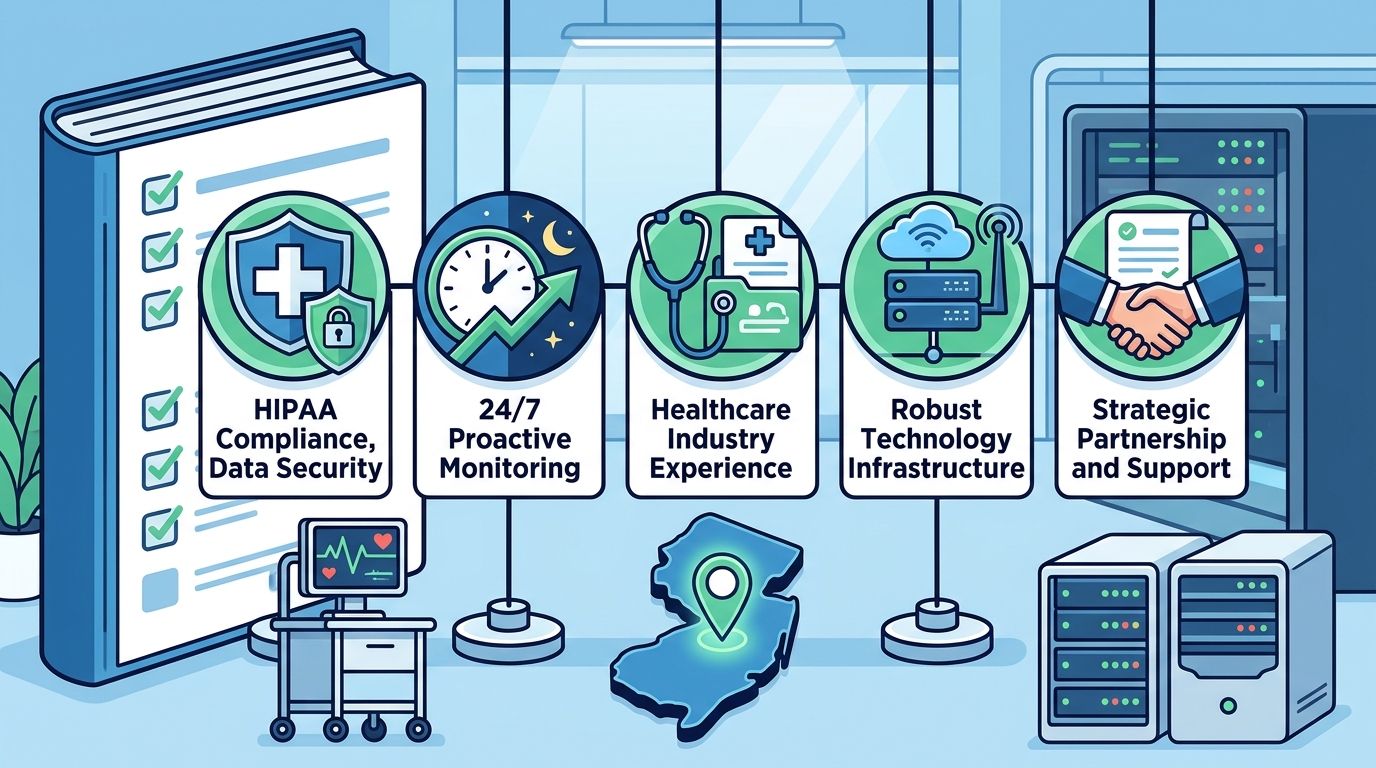
5. Local Presence and Communication
While remote support is common, local presence offers distinct advantages. Local support is the availability of on-site technicians who can respond to physical hardware issues quickly. For critical hardware failures, a remote fix is not always possible. A local provider can dispatch a technician to your office. Rivell is based in Sewell, New Jersey, and serves the South Jersey region. This local focus allows for faster response times and face-to-face communication. You should evaluate a provider’s communication style and responsiveness during the initial consultation. Clear, timely communication is essential for a successful partnership.
Key Takeaways
- Verify HIPAA compliance and data security protocols before signing a contract.
- Require 24/7 proactive monitoring to prevent downtime in critical healthcare operations.
- Choose a provider with specific experience in healthcare IT and EHR systems.
- Ensure the IT solution is scalable to support future growth and new technologies.
- Assess local presence for on-site support and rapid hardware response.
- Evaluate communication style and responsiveness during the initial consultation.
Frequently Asked Questions
What is HIPAA compliance in IT services?
It is the adherence to legal standards that protect patient health information from unauthorized access, including encryption and access controls.
Why is 24/7 monitoring important for healthcare?
It allows providers to detect and resolve issues before they cause downtime, ensuring continuous access to critical patient data and systems.
Does Rivell serve healthcare practices in New Jersey?
Yes, Rivell provides managed IT services and cybersecurity for healthcare organizations across New Jersey, including South Jersey.
What is the difference between reactive and proactive IT support?
Reactive support fixes problems after they occur, while proactive support monitors systems to prevent issues before they impact operations.
How does local presence benefit a healthcare practice?
Local providers can dispatch on-site technicians for hardware issues, offering faster response times and face-to-face communication.
Conclusion
Selecting the right managed IT provider is a critical decision for any healthcare practice. By focusing on HIPAA compliance, proactive monitoring, industry experience, scalability, and local presence, you can ensure a partnership that supports your operational goals. Rivell offers the expertise and local support needed to keep your practice secure and efficient. To discuss your specific IT needs, .