

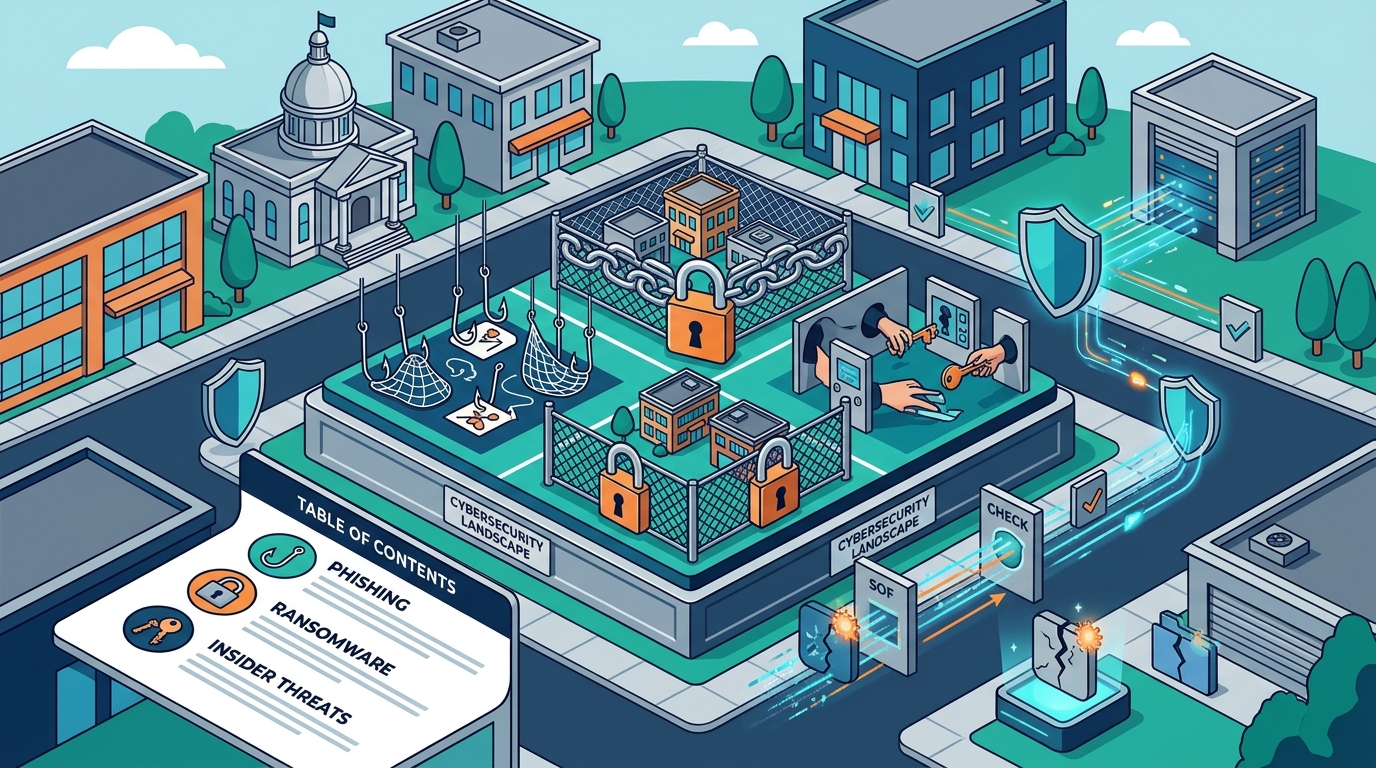
Mount Laurel businesses should prioritize phishing, ransomware, and insider threats as their most critical cybersecurity risks. These threats exploit human error, weak access controls, and outdated software. Rivell helps New Jersey organizations build layered defenses that address these specific vulnerabilities before they cause operational downtime or data loss.
Phishing and Social Engineering Attacks
Phishing is the most common initial vector for cyberattacks targeting small and mid-sized businesses. Attackers use deceptive emails, text messages, or phone calls to trick employees into revealing credentials or downloading malware. In 2026, AI-generated phishing campaigns are becoming more sophisticated, making it harder for staff to distinguish legitimate messages from malicious ones.
The evidence is clear: organizations that lack regular security awareness training suffer higher breach rates. Rivell’s cybersecurity services include ongoing user education and simulated phishing tests to reduce human error. By training employees to recognize red flags, businesses can significantly lower the risk of successful social engineering attacks.
Ransomware and Data Extortion
Ransomware is a type of malicious software that encrypts critical business files, demanding payment for their release. For Mount Laurel businesses, this threat is particularly dangerous because it can halt operations entirely. Attackers often target backup systems as well, leaving companies with no easy recovery option.
Recent industry data shows that ransomware attacks on small businesses have increased due to their perceived weaker defenses. Rivell implements robust backup and disaster recovery strategies to ensure data can be restored without paying a ransom. This approach protects business continuity and reduces the financial impact of such incidents.
Insider Threats and Access Control
Insider threats arise when employees, contractors, or partners misuse their access to sensitive data. This can happen through negligence, such as leaving systems unattended, or through malicious intent. Without proper access controls, a single compromised account can expose the entire network.
Effective access control is a core component of Rivell’s managed IT services. We implement multi-factor authentication and role-based access permissions to ensure only authorized personnel can reach critical systems. This minimizes the blast radius of any potential breach and helps maintain compliance with industry regulations.
Supply Chain and Third-Party Risks
Supply chain attacks occur when cybercriminals compromise a vendor or service provider to gain access to a business’s network. As Mount Laurel companies rely on more cloud services and third-party integrations, this attack surface expands. A single vulnerable software update from a trusted provider can introduce malware into the entire environment.
Rivell monitors third-party connections and ensures that all integrated services meet strict security standards. We help businesses vet their vendors and maintain an inventory of connected systems. This proactive stance reduces the likelihood of indirect breaches and strengthens overall network resilience.
IoT and Endpoint Vulnerabilities
Internet of Things (IoT) devices, such as smart cameras, thermostats, and printers, are often overlooked in cybersecurity planning. These devices frequently run on outdated firmware and lack built-in security features, making them easy entry points for attackers. Once compromised, they can be used to launch attacks on the main network.
Rivell’s endpoint protection services extend to all connected devices, not just traditional computers. We segment IoT devices onto separate network zones to limit their access to critical data. This strategy ensures that a compromised smart device cannot easily spread to the rest of the business infrastructure.
Key Takeaways
- Phishing remains the top initial attack vector, requiring continuous employee training.
- Ransomware threatens operational continuity, making reliable backups essential.
- Insider threats can be mitigated through strict access controls and multi-factor authentication.
- Third-party and supply chain risks expand the attack surface for connected businesses.
- IoT devices require network segmentation to prevent lateral movement by attackers.
- Rivell provides comprehensive cybersecurity services tailored to New Jersey businesses.
Frequently Asked Questions
What is the most common cybersecurity threat for small businesses?
Phishing is the most common threat, as it relies on human error rather than technical exploits. Regular training and multi-factor authentication are the best defenses.
How can Rivell help protect my Mount Laurel business?
Rivell offers managed cybersecurity services, including threat monitoring, backup solutions, and employee training, specifically designed for New Jersey organizations.
Is ransomware a realistic threat for small companies?
Yes, ransomware attackers often target small businesses because they may lack robust backup and recovery plans. Implementing offline backups is a critical mitigation strategy.
What is an insider threat?
An insider threat is a security risk posed by employees or contractors who have authorized access to systems but misuse it, either intentionally or accidentally.
How do I secure my IoT devices?
Secure IoT devices by changing default passwords, updating firmware regularly, and placing them on a separate network segment from your main business systems.