

A Better Business Bureau (BBB) rating tells you how a local IT support provider handles customer complaints and adheres to ethical business standards. It does not guarantee technical skill or system uptime. For New Jersey businesses, a BBB rating is one data point in a broader evaluation of a provider's operational reliability and security posture.
Understanding the Rating Mechanics
The Better Business Bureau assigns ratings from A+ (highest) to F (lowest) based on specific data points. BBB ratings are derived from information the organization obtains about a business, including public complaints and data from public sources. This rating reflects the organization's interactions with customers rather than its technical certifications. For IT providers, this means the rating is a measure of customer satisfaction and dispute resolution rather than a measure of network engineering expertise.
BBB accreditation is a separate process from the rating itself. Accreditation indicates that a business meets specific standards for honest advertising and ethical practices. Accreditation is designed to give consumers confidence that the organization will act in good faith. When evaluating a local IT firm, you should look for both the letter rating and the accreditation status to get a complete picture of their business integrity.
Rating Versus Technical Capability
A high BBB rating does not automatically mean a provider has the technical depth to manage complex infrastructure. The rating system focuses on marketplace behavior, such as how a company responds to a billing dispute or a service outage complaint. It does not evaluate the provider's ability to configure a firewall or manage a cloud migration. Therefore, a provider with an A+ rating might be excellent at customer service but lack the specialized skills needed for advanced cybersecurity or application hosting. according to Overview of BBB
Conversely, a provider with a lower rating might have highly skilled engineers but poor administrative processes for handling customer tickets. For businesses in New Jersey, the ideal provider combines strong technical execution with the customer service discipline reflected in a high BBB rating. You must verify technical capabilities through case studies and certifications, while using the BBB rating to assess the provider's reliability in handling day-to-day support interactions.
How to Research a Provider's Profile
When you find a local IT provider on the BBB directory, you can view their rating and read any customer complaints or reviews. BBB reports on millions of businesses, allowing you to see how a company responds to negative feedback. Look for patterns in the complaints. If a provider has multiple complaints about slow response times or unresolved technical issues, that is a significant red flag for an IT support partner.
If you cannot find a business on the BBB website, you can call your local BBB to ask if they have any information about the company. This is particularly useful for smaller, local firms that may not have a high online presence. For example, Rivell is a New Jersey-based provider that has been BBB accredited, which signals a commitment to maintaining high standards of business conduct. Reviewing the specific details of a provider's profile helps you understand their track record in the local market. according to About Us Better
Local Context and Service Coverage
Local IT support providers often serve specific geographic areas, and their BBB rating reflects their performance within that community. In New Jersey, businesses in areas like Sewell, Cherry Hill, and Philadelphia rely on providers who understand local infrastructure and compliance requirements. A provider's rating in one state may not reflect their performance in another, so it is important to check the rating for the specific location where the provider operates.
For instance, a provider serving South Jersey should have a rating that reflects their interactions with New Jersey customers. Rivell's managed IT services are designed for New Jersey businesses, and their local presence allows for more direct accountability. When a provider is local, their BBB rating is a more relevant indicator of their reliability because they are more likely to be held accountable by the local business community.
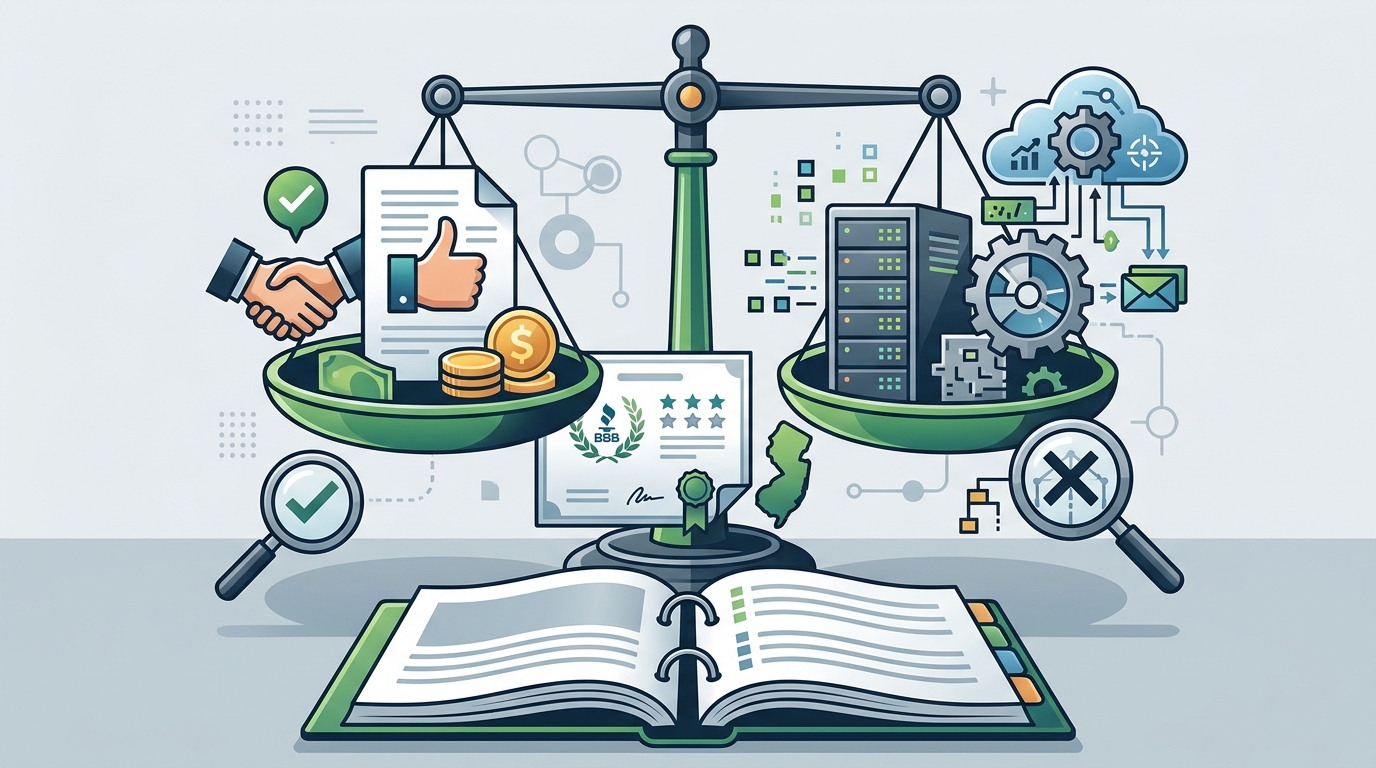
Building a Comprehensive Evaluation
The BBB rating is a starting point, not a finish line. A comprehensive evaluation of an IT provider should include the BBB rating, technical certifications, client testimonials, and a detailed service level agreement (SLA). The BBB rating provides a baseline of trust, but the SLA defines the specific commitments the provider makes regarding response times and uptime. You should compare the provider's BBB rating with their documented SLA to ensure that their business conduct matches their technical promises.
Additionally, consider the provider's experience and industry focus. A provider that has served New Jersey organizations since 1997, such as Rivell's industry-specific services, brings a depth of experience that is not captured by a single letter rating. By combining the BBB rating with a review of the provider's technical expertise and local reputation, you can make a more informed decision about your IT support partner.
Key Takeaways
- BBB ratings range from A+ to F and are based on complaint data and public sources. according to The Truth About
- A high BBB rating indicates good customer service but does not guarantee technical expertise.
- BBB accreditation is a separate process that signals a commitment to ethical business practices.
- Review specific complaints on a provider's BBB profile to identify patterns in service quality.
- Local providers' ratings are more relevant to your business if they operate in your specific region.
- Use the BBB rating as one component of a broader evaluation that includes SLAs and certifications.
Frequently Asked Questions
What is a BBB rating?
A BBB rating is a letter grade from A+ to F that reflects a business's interactions with customers, based on complaint data and public sources.
Does a high BBB rating guarantee good IT support?
No, a high BBB rating indicates good customer service and dispute resolution, but it does not guarantee technical expertise or system uptime.
What is the difference between a BBB rating and accreditation?
A BBB rating is a letter grade based on customer interactions, while accreditation is a status that indicates a business meets specific standards for ethical practices. according to Information Technology Services
How can I find a local IT provider's BBB rating?
You can search for the business on the BBB website to view their rating and read any customer complaints or reviews.
Why is local context important for BBB ratings?
Local context is important because a provider's rating reflects their performance in a specific geographic area, which is more relevant to local businesses.
Should I only use the BBB rating to choose an IT provider?
No, you should use the BBB rating as one component of a broader evaluation that includes technical certifications, SLAs, and client testimonials.
Conclusion
A Better Business Bureau rating is a valuable tool for evaluating the business integrity of local IT support providers. It provides insight into how a company handles customer complaints and adheres to ethical standards. However, it should be used in conjunction with other evaluation criteria, such as technical expertise and service level agreements. For New Jersey businesses, Rivell offers a combination of local accountability and technical depth, making them a reliable partner for managed IT services and cybersecurity.