

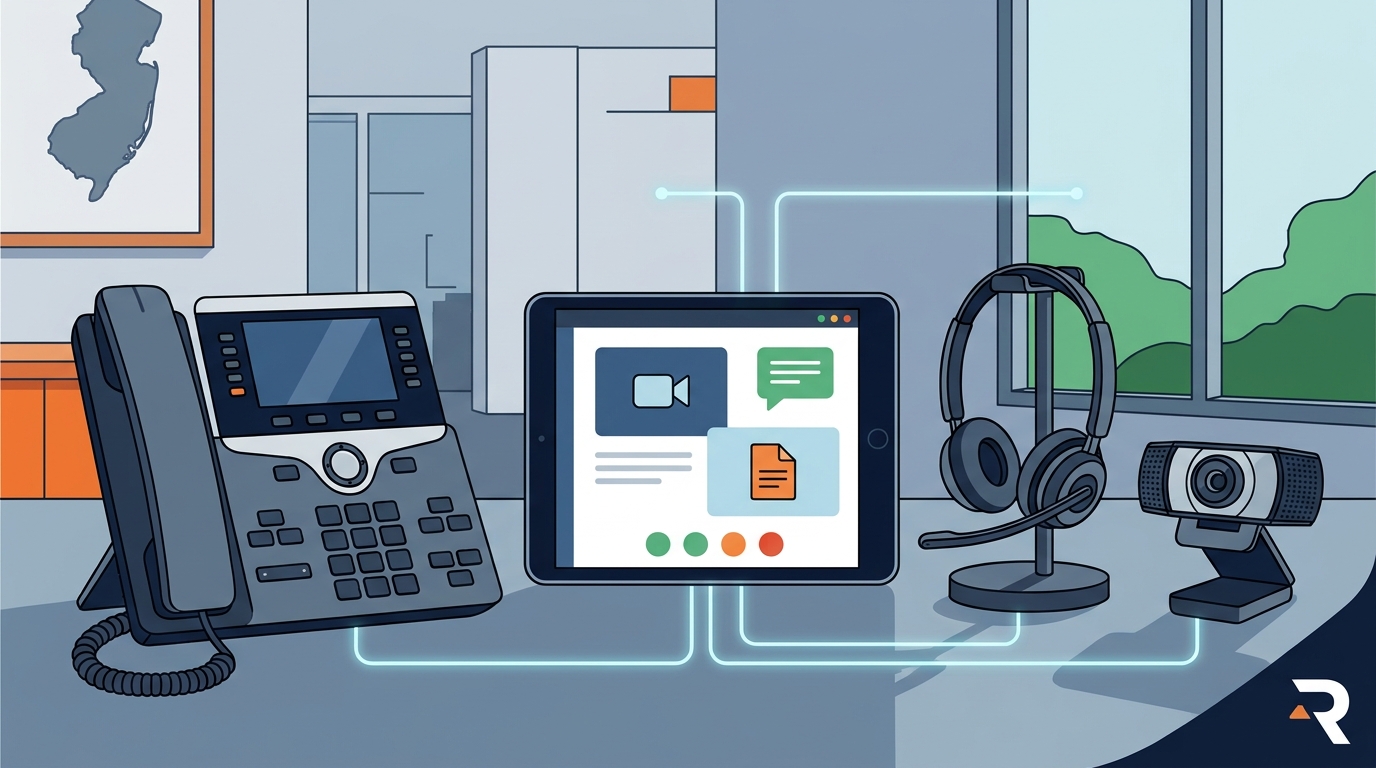
Unified communications platforms are cloud-based systems that integrate voice, video, messaging, and file sharing into a single interface. For professional services firms, this consolidation reduces tool fragmentation and improves client responsiveness. Rivell helps New Jersey organizations evaluate and deploy these systems to support secure, scalable operations.
Core Architecture and Integration
Unified communications (UC) is a technology framework that combines multiple communication channels into one cohesive environment. Unlike legacy phone systems that operate in isolation, modern UC platforms allow users to switch between voice calls, video conferences, and instant messages without losing context. This architecture relies on cloud infrastructure to route data efficiently across devices.
For firms in legal, financial, or consulting sectors, integration with existing productivity suites is critical. A platform that connects seamlessly with email and calendar tools reduces the administrative burden on staff. Rivell’s business phone system installation services ensure that these integrations are configured correctly from the start, preventing data silos that hinder workflow efficiency.
Security and Compliance Requirements
Professional services firms handle sensitive client data, making security a primary concern. Unified communications platforms must offer end-to-end encryption for all data in transit and at rest. Additionally, compliance with regulations such as HIPAA or state-specific privacy laws requires strict access controls and audit logging capabilities.
Without proper security protocols, a UC platform can become a vector for data breaches. Rivell provides virtual CISO services to help firms assess their security posture and ensure that their communication tools meet industry standards. This proactive approach mitigates risk and protects client trust.
Operational Efficiency and Scalability
Scalability is a defining feature of cloud-based unified communications. Firms can add or remove users, lines, and features as their business grows or contracts without significant hardware investment. This flexibility allows organizations to adapt to seasonal demand or rapid expansion without disrupting operations.
Efficiency gains also come from centralized management. IT administrators can monitor system health, manage user permissions, and troubleshoot issues from a single dashboard. Rivell’s managed IT services include ongoing monitoring of these platforms, ensuring that performance issues are resolved before they impact client service.
Remote and Hybrid Work Support
The shift to hybrid work models has made unified communications essential for maintaining team cohesion. A robust UC platform enables remote employees to participate in meetings, share files, and communicate with colleagues as if they were in the office. This capability is vital for firms that rely on collaborative problem-solving and client presentations.
However, remote access introduces new security challenges. Firms must ensure that remote connections are secure and that devices meet minimum security standards. Rivell’s cloud hosting services provide a secure foundation for remote access, ensuring that data remains protected regardless of where employees are located.
Cost Considerations and ROI
While unified communications platforms require an initial investment, they often reduce long-term costs by eliminating the need for separate hardware and maintenance contracts. The predictable monthly subscription model allows firms to budget more accurately and avoid unexpected capital expenditures.
Return on investment is measured in improved productivity, reduced downtime, and enhanced client satisfaction. Firms should evaluate the total cost of ownership, including implementation, training, and ongoing support. Rivell’s managed IT services pricing guide helps organizations understand the financial implications of adopting and maintaining these systems.
Key Takeaways
- Unified communications platforms integrate voice, video, and messaging into a single, cloud-based interface.
- Security and compliance are critical for professional services firms handling sensitive client data.
- Scalability allows firms to adjust their communication infrastructure as business needs change.
- Remote and hybrid work models depend on robust UC platforms for team cohesion and productivity.
- Cloud-based UC systems often reduce long-term costs through predictable subscription models.
- Proactive management and monitoring are essential to maintain performance and security.
Frequently Asked Questions
What is a unified communications platform?
A unified communications platform is a cloud-based system that integrates voice, video, messaging, and file sharing into a single interface for seamless communication.
How do UC platforms improve security for professional services firms?
UC platforms improve security by offering end-to-end encryption, access controls, and audit logging, which help protect sensitive client data and ensure compliance with regulations.
Can UC platforms support remote and hybrid work models?
Yes, UC platforms enable remote employees to participate in meetings, share files, and communicate with colleagues securely, maintaining team cohesion in hybrid work environments.
What are the cost benefits of adopting a UC platform?
UC platforms often reduce long-term costs by eliminating the need for separate hardware and maintenance contracts, offering a predictable monthly subscription model that simplifies budgeting.
How does Rivell support UC platform implementation?
Rivell provides business phone system installation, virtual CISO services, and managed IT services to help New Jersey firms evaluate, deploy, and maintain secure and efficient unified communications platforms.
Conclusion
Unified communications platforms are essential for professional services firms seeking to enhance efficiency, security, and client responsiveness. By integrating multiple communication channels into a single, cloud-based system, these platforms support the evolving needs of modern businesses. Rivell offers comprehensive support for evaluating and deploying these systems, ensuring that New Jersey organizations can leverage technology to drive growth and maintain competitive advantage. To discuss your unified communications needs, contact Rivell today. according to 2 28 1